Beyond the Screen with Myriam Rachmuth
The editor on the interplay between music and editing, and her career path
14.04.2026
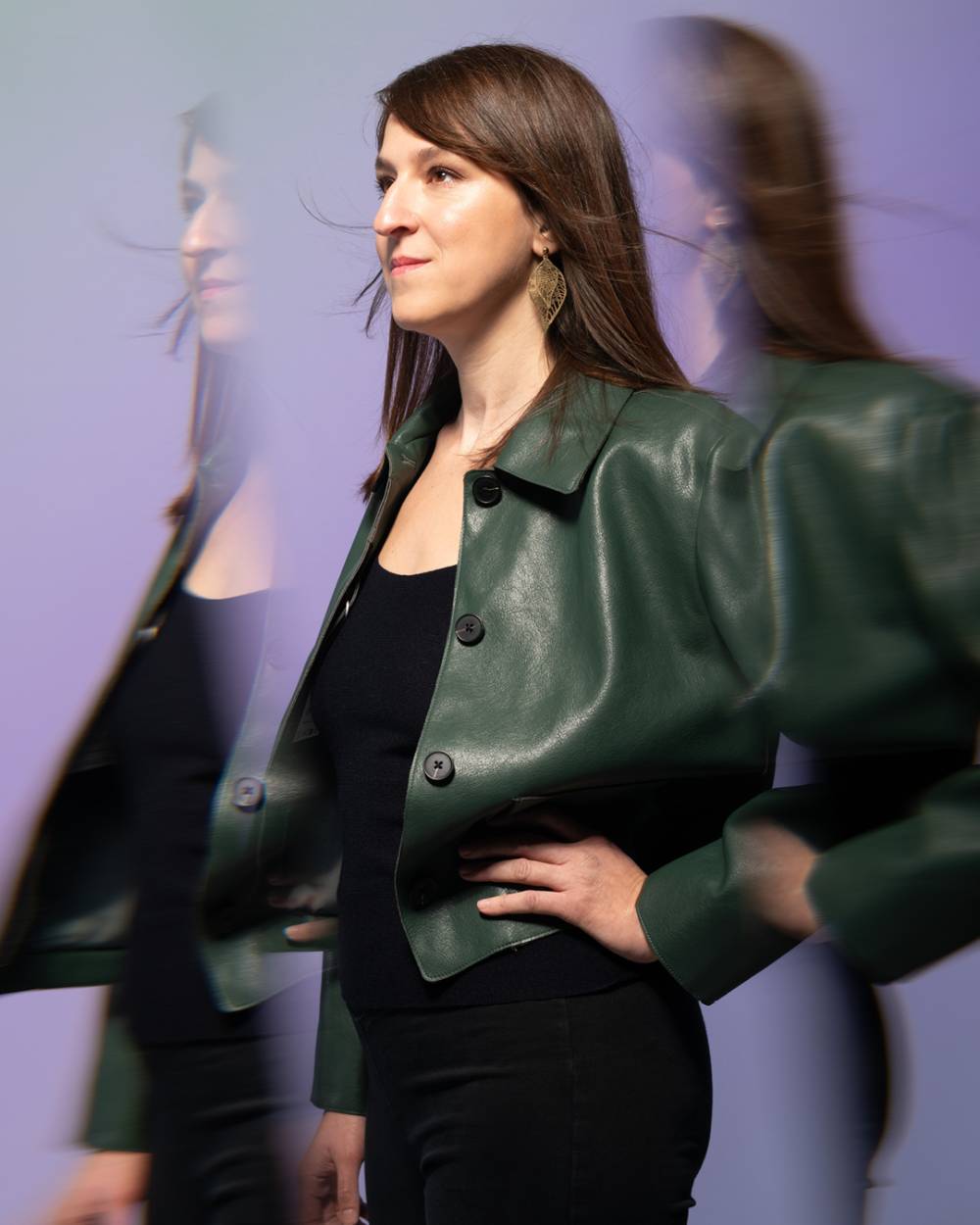
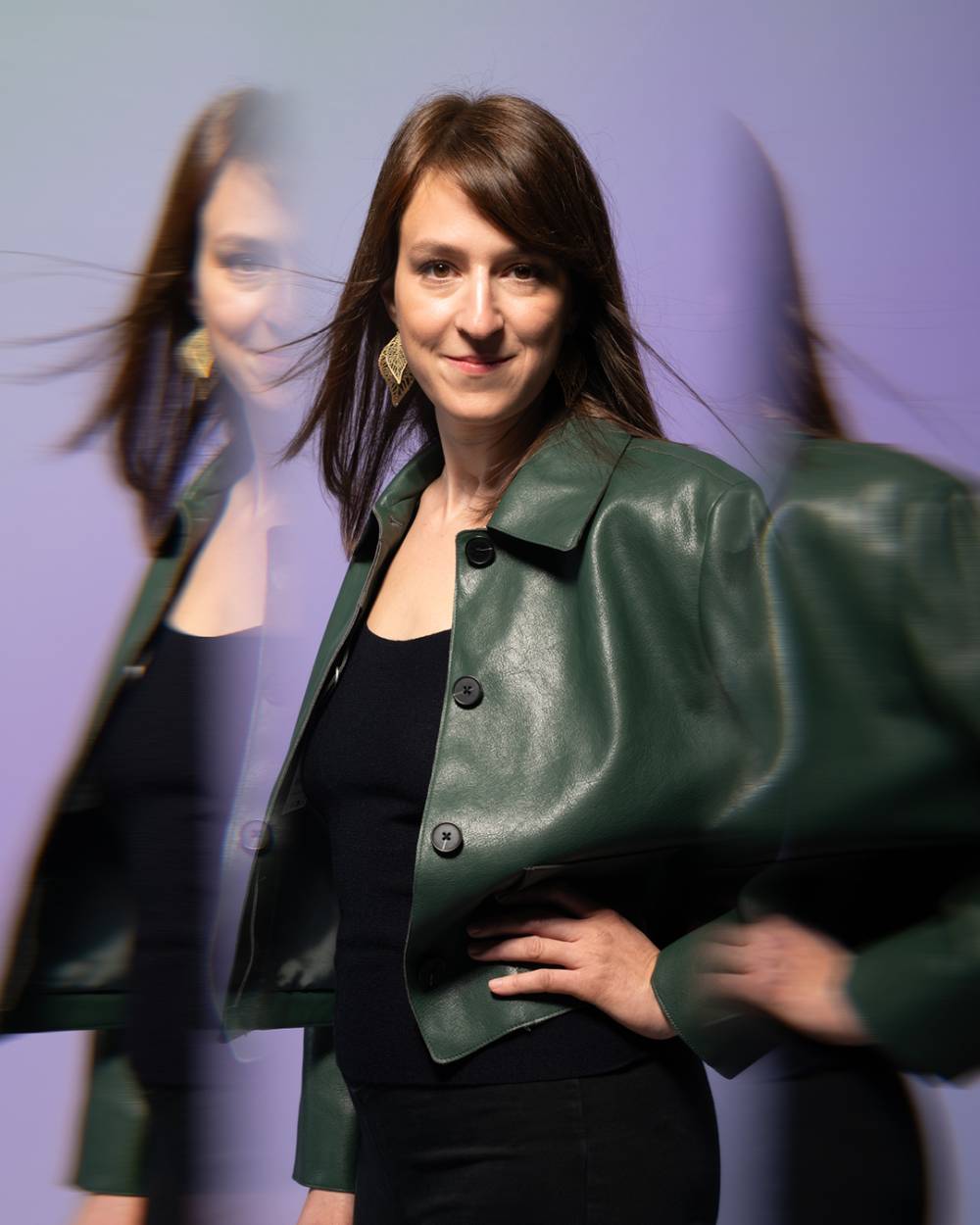
Myriam Rachmuth studied directing at ECAL before making a name for herself as a film editor. In 2021, she won the Swiss Film Award for her editing work on MY LITTLE SISTER (SCHWESTERLEIN). Her latest project, SAFE SPACES by Sarah Horst, produced by Milan Film, will have its world premiere at Visions du Réel in Nyon.
.jpg)
How did your collaboration on SAFE SPACES come about?
Director Sarah Horst called me after the shoot had already wrapped. We didn’t know each other. To get a sense of the project, I asked her to send me the dossier along with a few stills. She ended up spending an entire day taking screenshots! I immediately connected with the protagonists and the imagery. Then, once I spoke with Sarah and got to know her approach, I knew we would work well together.
This was your first collaboration with a director from German-speaking Switzerland. What attracts you to working across the “Röstigraben”?
Switzerland is small, yet I’ve rarely had the chance to work outside the French-speaking part. There’s so much talent in this country, and we can really benefit from each other, if it’s feasible from a production standpoint.
On SAFE SPACES, I loved broadening my perspective and discovering different ways of working (and even practicing a bit of Swiss-German along the way). I also enjoy editing films in languages other than French, it opens up new musical dimensions for me.
For MY LITTLE SISTER, which I edited in 2019, the French-speaking directors Stéphanie Chuat and Véronique Reymond worked with a partly German-speaking crew. I think that contributed greatly to the film.
How did winning the Swiss Film Award for “MY LITTLE SISTER” impact your career?
It reassured me that I was on the right path as an editor. More than the award itself, what stayed with me is what I learned from the directors.
They placed great importance on “breathing” with the actors, letting yourself be carried by their rhythm. It was something I had been doing intuitively, but becoming aware of it was a real turning point for me. I now think about it with every edit, whether in fiction or documentary.
That’s also when I fully realized how music can function as an element of editing, just like acting, rushes, or sound. I think very early in the process of sequences that might be supported by music, and I try to develop musical ideas from the start, so that I can work in a kind of back-and-forth with composers throughout the editing process. That’s how I worked in particular on SAFE SPACES (music by Mirjam Skal) and STUNTWOMEN (CASCADEUSES) (music by Ella Malherbe and Marzia Celii), whose music I love.
Is there a moment or project from your studies that you remember especially fondly?
A defining memory is the short documentary I made during my studies at ECAL. SPARE TIME (ENTRE LES PASSES) captures the daily life of two young Romanian women who came to Switzerland to work in a brothel. It gave me the opportunity to explore themes such as desire, self-worth, and love, but also to engage with my own Romanian identity.
With this film, I was lucky enough to travel to festivals. There, I discovered new possibilities of filmmaking by watching very different films from around the world, dealing with topics that were sometimes unfamiliar to me. It was an opportunity to rediscover the world through the unique perspectives of different authors.
Which editors inspired you to pursue editing as a profession?
It wasn’t so many specific individuals who led me to editing, but rather my experiences during my studies. I studied directing, but quite early on I realized that I preferred supporting projects driven by others, while still being at the heart of the writing process and close to the director’s vision.
Once I chose editing, editors like Karine Sudan and Loredana Cristelli became inspiring and motivating role models. Both have impressive filmographies, with long-standing collaborations with certain directors as well as a wide range of projects. Loredana, in particular, supported me on the first feature films I edited and has always been a great source of encouragement.
Are there film scenes that keep coming back to you, unexpectedly, in your dreams, while shopping, or in the shower?
The scenes – and especially the dialogue – from the films I’m currently editing! I often dream of lines I’ve heard 50 times during the day. Interestingly, they’re usually very simple sentences whose sound stays with me like a repeating melody.
You took part in Berlinale Talents in 2024. What has stayed with you from that experience?
I had some wonderful international encounters. That said, it’s still rare for me to be hired on foreign productions, unless they’re Swiss coproductions. On a human level, the experience left a strong impression on me, especially the exchanges among editors. Everyone shared their experiences, strengths, and weaknesses generously, without feeling the need to prove anything. I came away from it full of energy and inspiration.
How would you describe your style and working approach?
I try to listen very carefully to directors, because each editing process needs to be reinvented together. That exchange is essential, it helps me understand where they want to take the film and how I can support that vision.
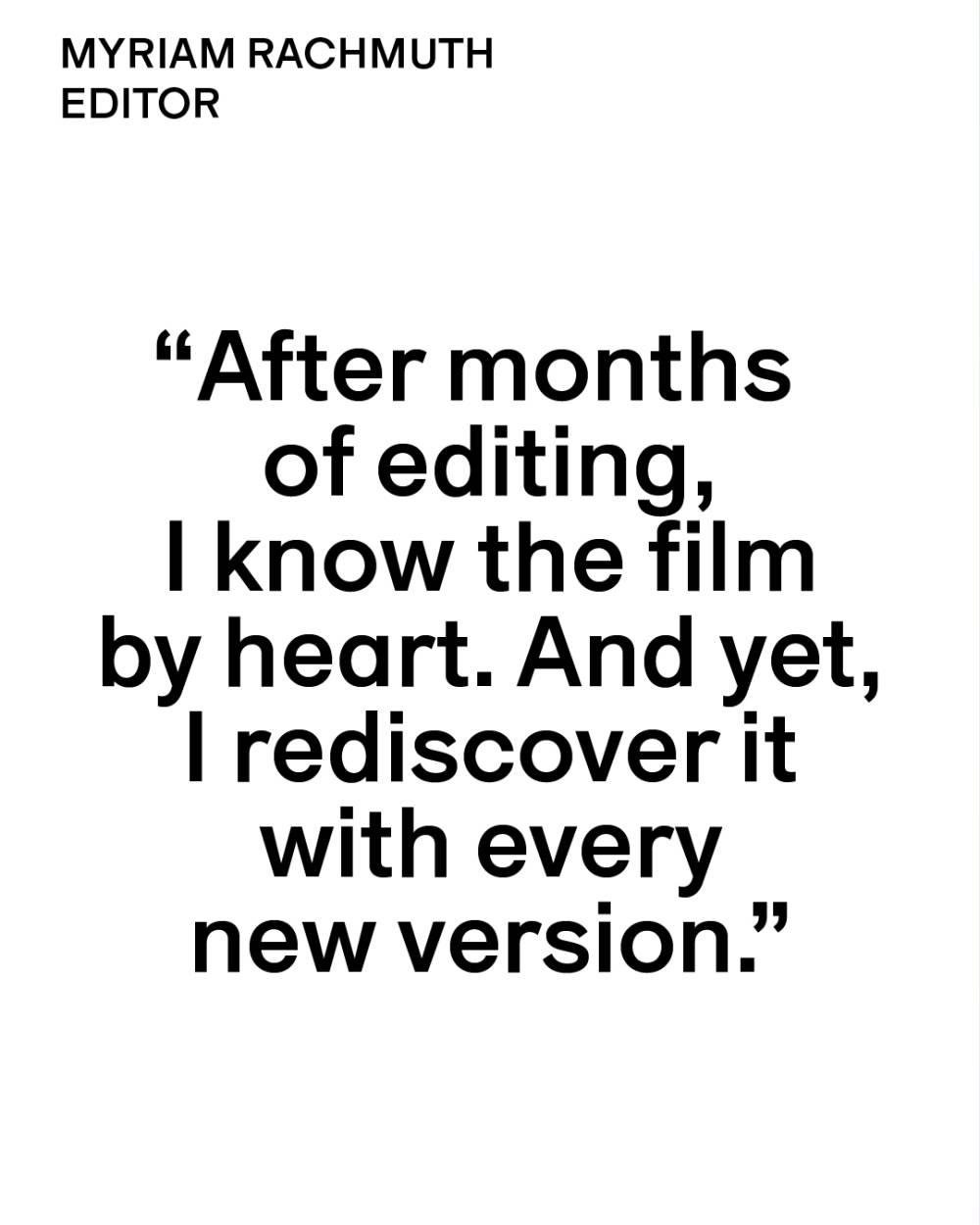
Even though I know the editing process inside out, I try to stay connected to my emotions and perceptions, so I can rediscover the film with each viewing and feel its rhythm and musicality as if it were the first time.
How do you decide which projects to take on?
I enjoy moving between different formats, styles, and themes, shifting between documentary and fiction, meeting new collaborators while also continuing established partnerships... But above all, what matters most is the relationship with the director. I need to feel that we share a similar ethical outlook and that we can communicate freely and listen to each other throughout the entire editing process.
What are you currently working on?
I’ve just completed editing a short fiction film by Natalia Ducrey and Raphaël Rivière, L’INSTINCT PATERNEL, a comedy expected to be released this year.
I’m also currently working on two projects from RTS’s “De la scène à l’écran” series, as well as several fiction and documentary projects still in the financing stage, including Sarah Horst’s next film.